
What Makes a Kathi Roll Different From a Wrap?
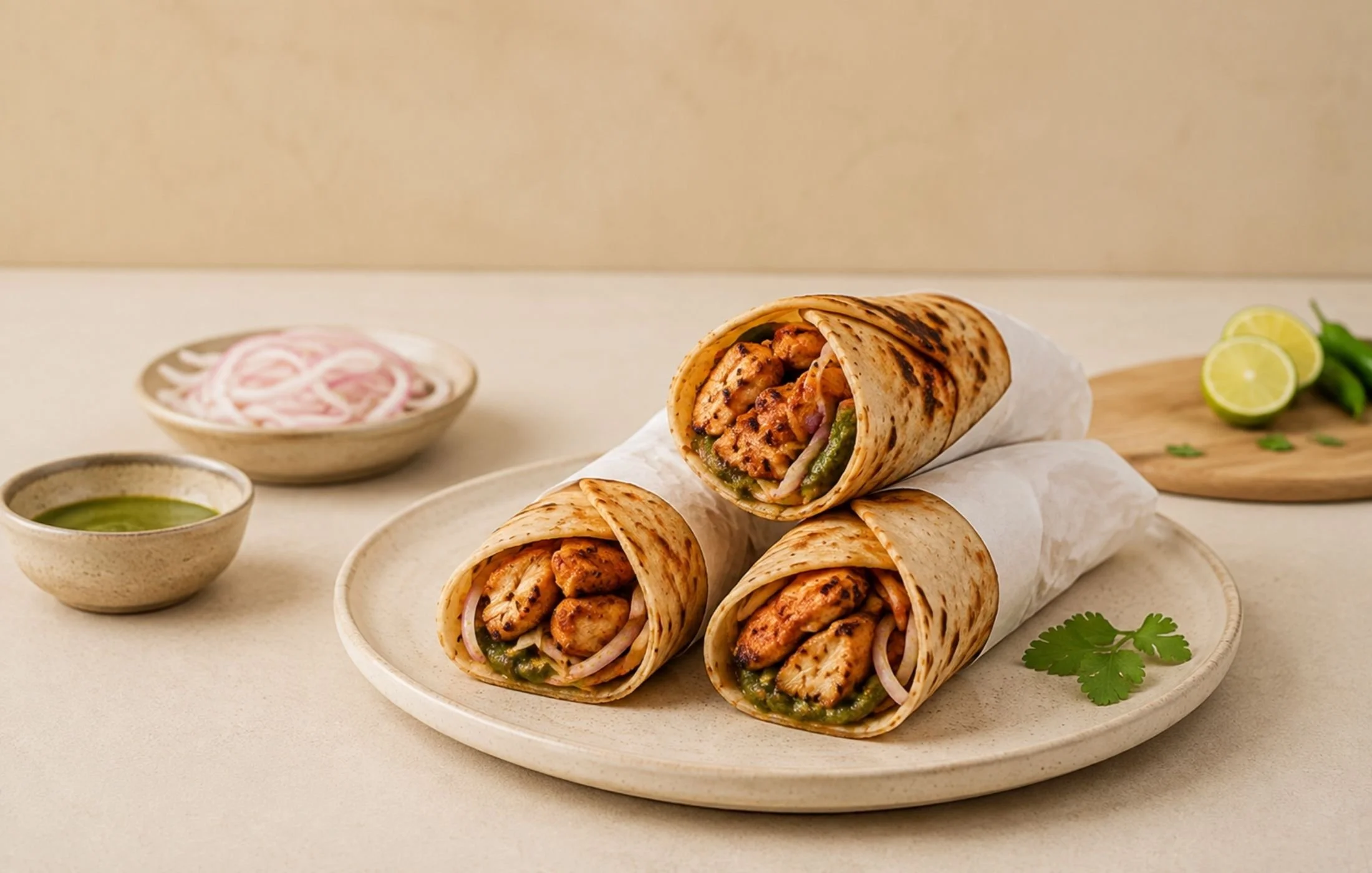
If you've ever searched for kathi roll near me, you may already know how satisfying this Indian street food can be. But what exactly makes a kathi roll different from an ordinary wrap?
A kathi roll is technically a wrap, but calling it just a wrap misses what makes it special. With its flaky paratha, boldly seasoned grilled filling, fresh onions, mint chutney, and squeeze of lime, a kathi roll has its own distinct identity.
So, what makes a kathi roll different from a wrap? The answer comes down to its origins, its bread, its filling, and the classic toppings that bring everything together.
What Is the Origin of the Kathi Roll?
Nizam's Restaurant in Kolkata invented the kathi roll in the 1930s. The problem they were solving was that customers wanted to take their seekh kebabs on the go, but skewer-grilled kebabs are messy and hot to hold.
The solution was to wrap the kebab inside a paratha, fold it in paper, and hand it over. Portable, filling, and fast. The name comes from "kathi," the Bengali word for the iron skewer used to grill the original kebab.
Rollzzy keeps that original logic intact across every location in BC, serving rolls built around the same format that made the kathi roll worth eating in the first place.
What Differentiates a Kathi Roll From a Wrap?
Indian wrap vs regular wrap comes down to three things.
The bread. A kathi roll uses paratha, a layered, unleavened flatbread cooked on a flat griddle. Many traditional versions add an egg wash directly onto the paratha while it cooks, which creates a slightly crispy, golden exterior that holds the filling without going soggy.
A regular wrap uses tortilla, pita, lavash, or generic flatbread. These are softer, thinner, and neutral in flavour. The paratha is richer, flakier, and adds its own distinct texture to every bite.
The filling. The original kathi roll filling was skewer-grilled seekh kebab, marinated in Indian spices and cooked at high heat to develop char.
Modern versions include chicken tikka, paneer tikka, galouti kebab, soya chaap, and spiced vegetable options.
The key is that the filling is always seasoned independently, grilled or cooked to develop flavour, and never bland. A generic wrap can hold anything. A kathi roll holds a specific kind of filling prepared a specific way.
The toppings. Raw onions, green mint chutney, and a squeeze of lime. That is the classic finish. The chutney cuts through the richness of the grilled filling. The onions add crunch. The lime brings acidity that makes every flavour sharper.
There are no salad leaves, no heavy mayo dressings, no filler vegetables. The toppings in a kathi roll have a job to do and they do it precisely.
Explore our full menu at Rollzzy to see how these elements come together across twenty-plus roll options.
Is a Kathi Roll a Wrap?
Yes, but it is a specific subset with its own rules.
Not every wrap is a kathi roll. A shawarma uses different bread and different spice profiles rooted in Middle Eastern tradition.
A Frankie, Mumbai's version, uses a thinner roti and a different flavour profile. A burrito uses a flour tortilla and completely different ingredients. The kathi roll sits in its own category with a clear origin, a clear method, and a clear identity.
Paratha, grilled filling, chutney, onions. Four components done right produce something that has been worth searching for since 1932.
Find Your Kathi Roll at Rollzzy
A good kathi roll eatery makes fresh paratha, grills the filling properly, and uses mint chutney made in house. Rollzzy does all three, open 24 hours across Vancouver, Surrey, Langley, Delta, Tsawwassen, Pitt Meadows, and Abbotsford.
Find your nearest Rollzzy and try the roll that started it all.
Still deciding on the filling? Build your own roll and put together the combination that sounds best before you walk through the door.