
Food as Culture: How Fusion Menus Reflect Today's Canada
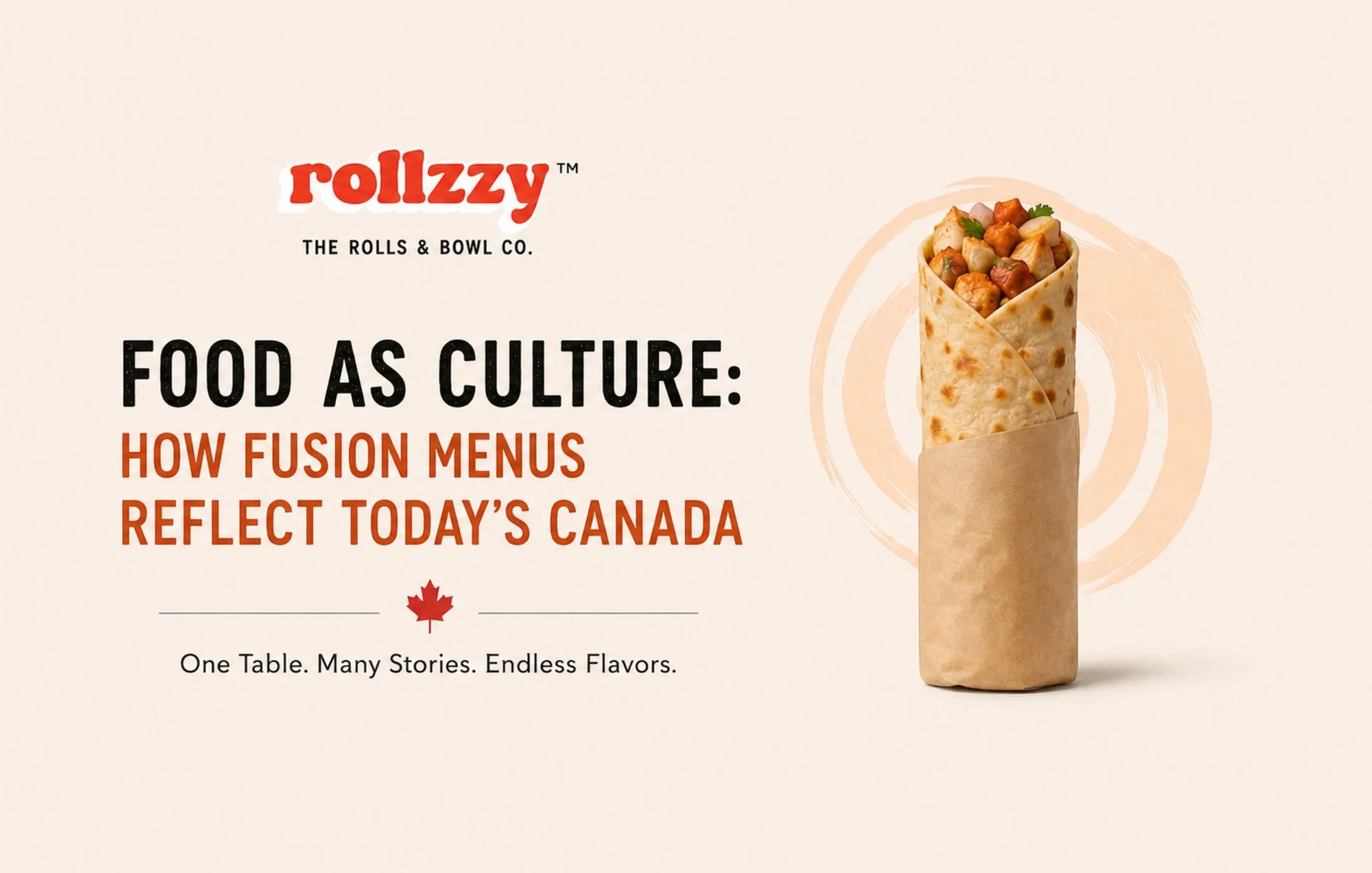
Unlike many countries like Spain, France, or Hungary, Canada has never officially claimed a national dish.
And that is not a gap in the culture. That IS the culture!
What Canada has instead is a table that keeps getting bigger, where every wave of people who arrived brought their food with them, and that food did not stay in one corner of the country. It moved. It mixed. It became something new while still carrying everything it came from.
That is what Canadian food actually is. Not one thing. Everything, at once, on the same plate.
How Canada Built One of the World's Most Diverse Food Cultures?
More than 23% of Canada's population today was born outside the country.
That number is not just a demographic statistic. It is a menu. Every community that settled here brought ingredients, techniques, and recipes that were passed down through generations and then quietly, inevitably, started showing up in Canadian kitchens everywhere.
Chinese immigrants introduced dim sum and stir fry techniques that are now as Canadian as anything else on the table. Italian settlers brought olive oil, fresh herbs, and pasta into everyday cooking long before it became a supermarket staple. Caribbean communities brought spice profiles and cooking methods that changed what bold flavour means in this country.
And Indian food, with its layered spices, slow-cooked curries, and street food culture, landed and never left.
What Indian Food Did to the Canadian Palate
Indian cuisine did not arrive in Canada quietly.
It arrived with turmeric, cumin, garam masala, and tamarind. It arrived with butter chicken that was rich enough to make people forget every other curry they had ever tried.
Today, dishes like chicken tikka masala fusion food appear on menus that have nothing to do with Indian restaurants.
That crossover did not happen by accident. It happened because the food was genuinely that good and people kept asking for more of it. Because the best food has never belonged to just one place. And in this country, that has always been the whole point.
Order now and taste the story for yourself.
Fusion Is Not a Trend. It Is Just What Happens When People Share Food.
The word fusion gets used like it is a modern invention.
It is not. Every cuisine in the world is a fusion of something older. Thai food carries Portuguese and Indian influence from centuries of trade. Italian pasta has Chinese origins that most people never think about. Canadian poutine is French technique meeting British comfort food meeting Quebec ingenuity.
Fusion is just what food does when cultures live next to each other long enough to start borrowing from each other's kitchens.
What is new in Canada right now is the speed of it. Cities like Vancouver are home to communities from every part of the world, and the food those communities brought is not staying within ethnic restaurant boundaries anymore. It is showing up in everything. Indo-Chinese noodle dishes sit next to classic kebab rolls. Butter chicken finds its way into formats it was never designed for. Spices that were once unfamiliar to most Canadians are now pantry staples.
Indian fusion food in Canada is not a niche category. It is the mainstream, and it has been for longer than most people realise.
The Indo-Chinese Thread That Runs Through Street Food
One of the most interesting fusions in Indian food culture did not even originate in Canada.
Indo-Chinese cuisine, the combination of Indian spice sensibility with Chinese cooking techniques, was born in Kolkata decades ago when Chinese immigrants settled in India and started cooking for Indian customers. The result was dishes like chilli chicken, hakka noodles, and Manchurian, all of which carry the heat and boldness of Indian spice but the wok-tossed technique of Chinese cooking.
That food made its way into the Indian diaspora and eventually into Canadian cities where both Indian and Chinese communities had already established roots. It felt familiar to many people for two different reasons at once.
At Rollzzy, this thread is alive on the menu. The Chilli Chicken Roll and the Chicken Noodle Roll carry that exact Indo-Chinese energy. Not forced. Not labelled as fusion for the sake of it. Just food that developed naturally at the intersection of two food cultures and landed exactly right.
Quality Is What Makes Fusion Work
Here is the thing about fusion food that does not get said enough.
When it works, it works because the quality ingredients are good enough to carry two food traditions at once. A Chilli Chicken Roll that uses properly marinated chicken with real heat and a fresh paratha can hold the Indo-Chinese fusion together because every element is doing its job. When the ingredients are not up to it, the fusion falls apart and what you get is just confusion on a plate.
This is why Indian fusion food has a reputation problem in some places and an incredible reputation in others. The difference is almost always the ingredients and the care behind them.
Explore the menu at Rollzzy and you will see fusion that earns its place. The Chilli Chicken Noodle Roll. The Zesty Achari Soya Roll. The Butter Chicken Roll. These are not novelty items. They are the result of two food cultures meeting and producing something that works better than either one alone.
Find the one closest Rollzzy outlet to you from our locations and eat food served with love from different cultures.
The Table Canada Set for Itself
Canada never had one food identity because it never needed one.
The food here has always been a conversation between cultures, a constant exchange of techniques and ingredients and memories carried across borders by people who brought the most important parts of home with them.
That exchange is still happening. It is happening every time someone in Vancouver tries a chilli chicken noodle roll for the first time and recognises something familiar in it even though they cannot quite place where from.
Order online and be part of that conversation. Or walk into any Rollzzy location and find a menu that reflects exactly what today's Canada actually tastes like.